
Located in the Blue Ridge Mountains of Western North Carolina, the Asheville School of Art opened its doors in the early days of 2026. With the goal of offering an exceptional arts education and a belief in the creative impulse as medicine, we believe a strong and vibrant Art community is essential to the health of society as a whole.
We are a local, independent contemporary Art school committed to excellence in the fields of Drawing and Painting. We believe that mastery of traditional tools needs to work in tandem with good ideas. Where there is no Craft, there is no Art. We believe in personal mentorship and skills-based studio instruction that seeks to balance technical skills with critical thinking.
Through our works we seek to be a part of cultivating an energetic and vibrant local scene here in Asheville, North Carolina.
Nick Raynolds
LEAD INSTRUCTOR
Founder and primary instructor at the Asheville School of Art, Nick Raynolds has lived in Asheville NC for the past 15 years And is the father of two brilliant young women. He has taught Art for many years at numerous independent and public institutions including at The Art Students League of New York; The National Academy of Design in NYC; the Gage Academy Of Art in Seattle WA and at UNCA and Warren Wilson College.
Known for his ability to work dynamically in a number of genres and media, Raynolds training is firmly grounded in a classical realist tradition of drawing and painting. While embracing this background, he nonetheless seeks to continuously evolve his art making practice.
Raynolds studied at the Water Street Atelier in Brooklyn, NY; in Vancouver and Halifax, Canada; Düsseldorf, Germany and holds an MFA from ETSU. He has worked widely in the Arts industry in various capacities, including as an assistant to internationally acclaimed artist Jeff Koons.

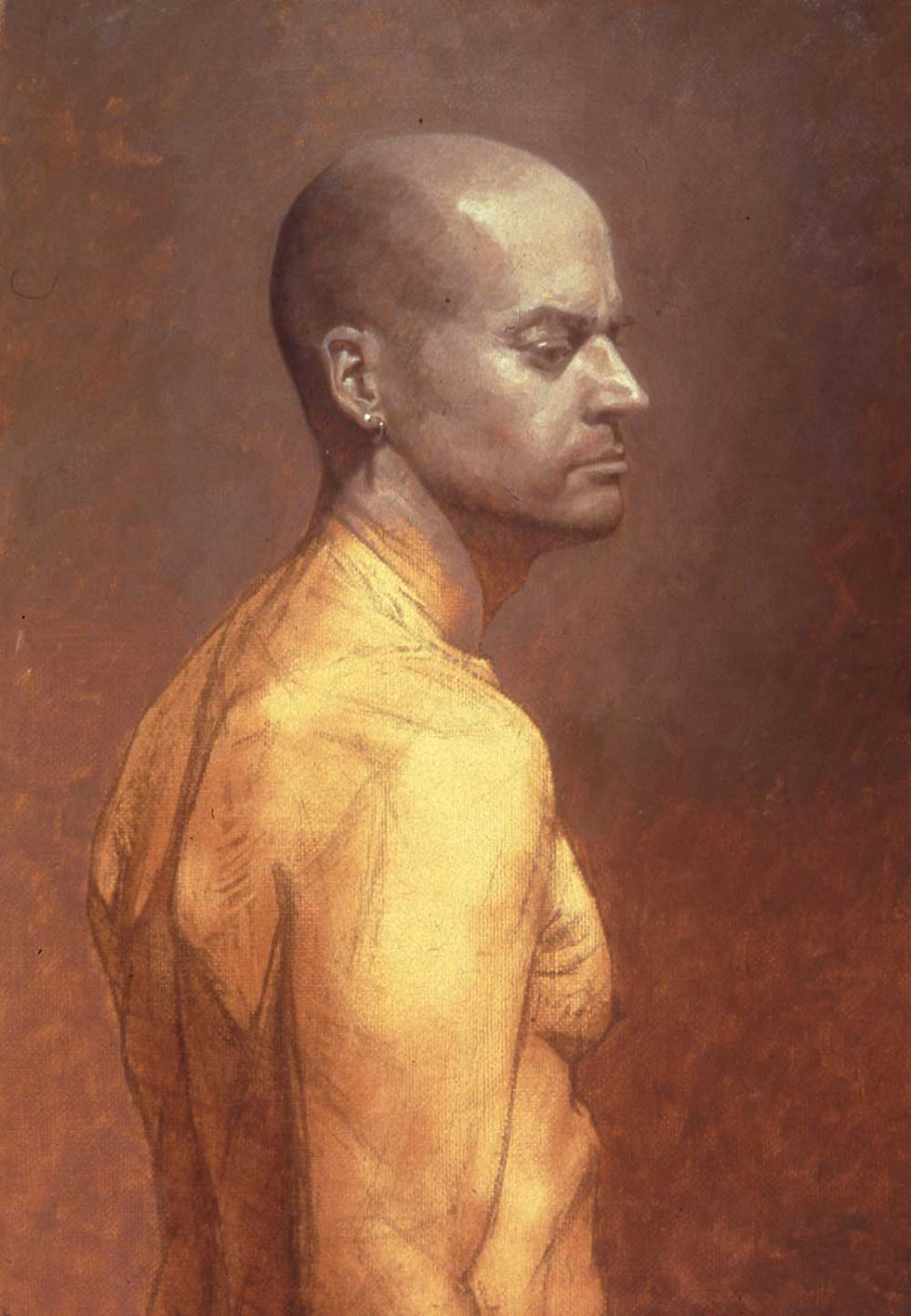
Works by Nick Raynolds


About
Whether you are a curious newcomer or a professional artist, a working creative or a retired passion-seeker, the Asheville School of Art is open to anyone with the desire to learn.
Learn to see, how to handle materials and how to construct engaging works of art. Through craft, curiosity and traditional materials we believe a skills based approach is the best way an aspiring artist can learn to translate the world around them as well as the world they can only imagine onto the 2-dimensional surface.